
Cheap can mean three very different things
When someone offers a website for a few hundred ringgit, the low price usually comes from one of three places. Knowing which one you are looking at tells you whether the offer is a good deal or a future problem.
- A small, honest scope: one page or a few pages, built quickly because the brief is clear and the client supplies the content.
- A shared template: a theme filled with your logo and text. Quick to launch, but harder to change and often similar to many other sites.
- A low entry price with costs later: monthly platform fees, paid plugins, hosting renewals or charges for every small edit.
The first option is what an affordable website should be. The second can work for a short campaign. The third is where many small businesses end up paying more over two years than they would have paid for a properly scoped custom build.
What each budget level can realistically cover
These are Bina Studio's current starting points. Other studios price differently, but the relationship between scope and cost is similar across the market.
| Budget | Realistic scope | Works well for |
|---|---|---|
| RM250 | One custom landing page, WhatsApp contact, mobile layout, basic search setup | A single service, a promotion, an event or a personal brand |
| RM399 | A 1–3 page business website with company, services and contact | A new SME that needs a credible company profile |
| RM499 | A product or menu catalogue with an enquiry path | Shops that take orders over WhatsApp rather than online checkout |
| RM599 | A booking enquiry flow with date or slot details | Classes, appointments, venues and stays confirmed manually |
| RM899 | A storefront with a payment-ready order structure | Businesses ready to sell or take deposits online |
What a low budget usually leaves out
A small budget works because some jobs move to the client or into a later phase. That is fair as long as it is clear before you pay. Expect these to be excluded or quoted separately:
- Copywriting and translation. You send the final text; the studio arranges it.
- Photography and image sourcing. Your own photos almost always convert better than stock images anyway.
- Custom forms with email notifications, auto-replies or spreadsheet connections.
- Online payment gateway integration and order management.
- Extra pages, a second language, or blog and news sections.
- Domain registration and renewal, business email inboxes and paid third-party tools.
None of these is a trick when it is written down. The problem is a quote that says only “complete website” and then charges for each of these items one at a time.
Five warning signs in a cheap website offer
- No written list of pages, features and revision rounds.
- A monthly fee that must be paid forever, with no option to move the site elsewhere.
- The domain registered in the provider's name instead of yours.
- No preview before launch, only a finished site you must accept.
- No mention of who fixes problems in the first weeks after launch.
Domain ownership matters most. If the provider owns your domain, moving away later can mean losing your address, your search history and any links customers have saved.
How to make a small budget go further
The cheapest way to get a good website is to arrive prepared. Every hour a developer spends waiting for content or guessing what you want is an hour you pay for somewhere.
- Choose one main action: a WhatsApp message, a phone call or a booking request.
- Write the text for each page, even in rough form. A studio can tidy wording faster than it can invent your business details.
- Collect real photos of your work, premises, products or team.
- Send two or three websites you like and say what you like about each.
- Start with fewer pages and add more once you see which questions customers ask.
A focused first version that launches this month is usually worth more than a large site that stalls for three months waiting on content.
When it is worth spending more
A low budget stops being the cheaper choice when the website must do real work for your team. Spend more when customers need to pay online, when staff must update products or records every week, when several services each need a proper page to rank in search, or when the site replaces a manual process such as spreadsheets and phone bookings.
In those cases, the extra cost buys time back every week. A good studio will tell you which side of the line your project sits on before you commit.
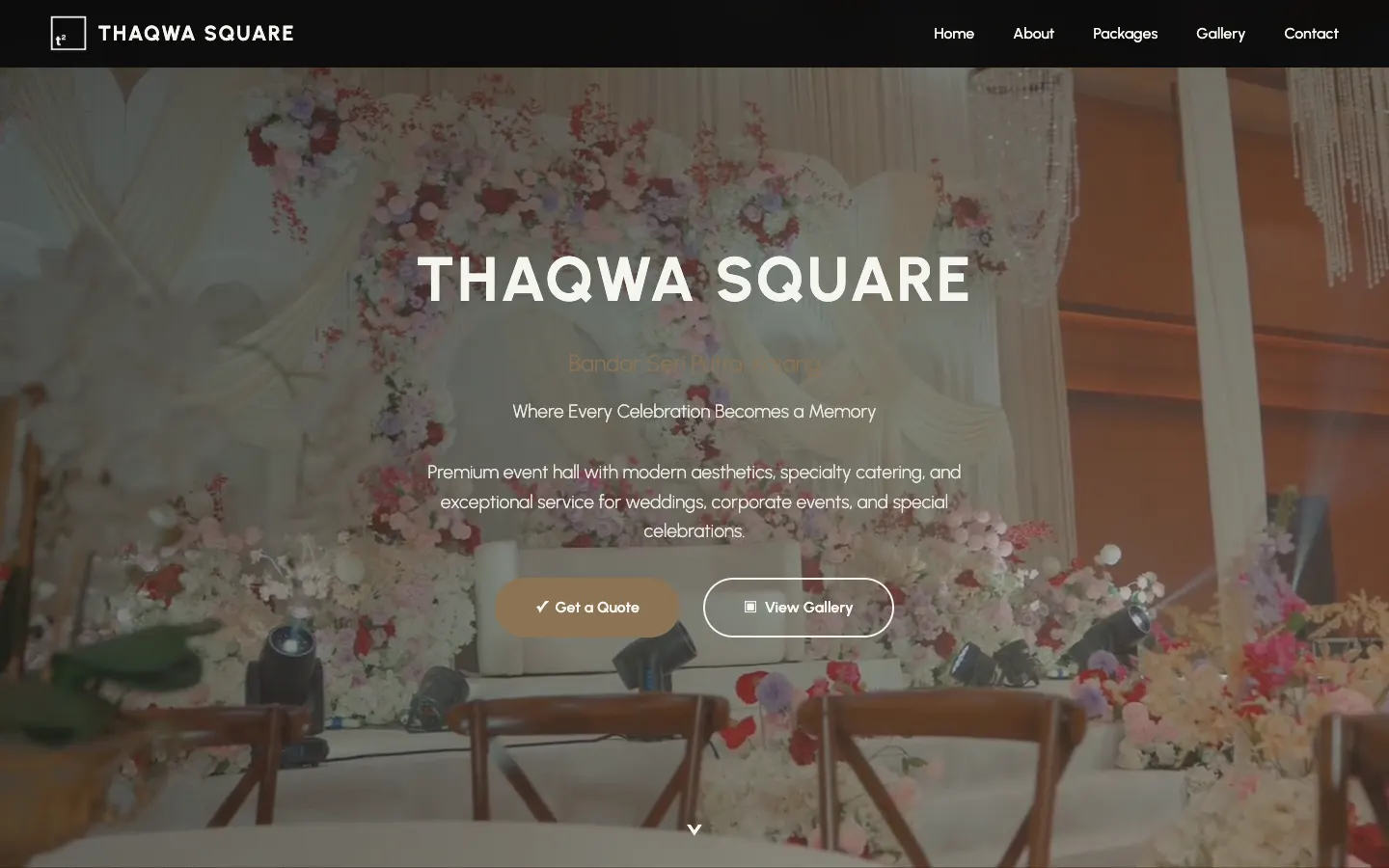 Project story · 5 min readThaqwa Square: a wedding hall website that turns browsing into WhatsApp quotes