
Three common ways to build a business website
| Approach | Who builds it | Typical ongoing cost |
|---|---|---|
| Website builder (Wix, Squarespace and similar) | You, using drag-and-drop tools | Monthly or yearly plan for as long as the site is live |
| WordPress with a theme | You or a freelancer, using a theme and plugins | Hosting, premium plugins and regular updates |
| Custom-coded website | A developer or studio, written for your business | Low hosting cost; changes quoted when needed |
None of these is automatically better. Each one moves cost, effort and control to a different place. The useful question is which trade-off suits how your business actually runs.
Who will edit the website after launch?
This question decides more than any other. If you want to change layouts, add pages and adjust designs yourself every week, a website builder gives you that freedom directly.
Most SMEs edit far less than they expect. They update prices, add photos, change opening hours or post the occasional event. For that pattern, a custom site with a small editing portal for exactly those items is simpler to use than a full builder, and much harder to break by accident.
Speed, search and how customers experience the site
Most of your visitors in Malaysia will arrive on a phone, often on mobile data. A page that loads slowly loses some of them before they see your offer. Search engines also measure loading speed and stability as part of page experience.
- Builders load their own scripts on every page, including features you may not use.
- WordPress speed depends heavily on the theme, the number of plugins and the hosting.
- Custom-coded sites only ship the code each page needs, which makes fast loading easier to achieve and keep.
Speed is not everything. A slow site with clear information still beats a fast site with nothing useful on it. But when two businesses offer similar services, the one whose page opens instantly on a phone has an advantage.
Maintenance and security
WordPress powers a large share of the web, which also makes it a frequent target. Its core, theme and plugins need regular updates, and an outdated plugin is a common way sites get compromised. That work is manageable, but someone must own it.
Website builders handle updates for you, in exchange for the monthly fee and the platform's limits. Custom-coded static sites have very little to update because there is no plugin layer and often no database on the public site.
Lock-in: can you leave if you need to?
With most builders, the design cannot be exported. If you stop paying or want to move, you rebuild. WordPress can be moved between hosts, though themes and paid plugins come with their own licences. A custom-coded site is a set of files that can be hosted almost anywhere, and the code can be handed over.
Whatever you choose, keep the domain in your own name. That is the one piece that should never be locked to a provider.
A quick way to decide
- You want to design and edit everything yourself, and a monthly plan is fine: use a website builder.
- You publish lots of articles and have someone to maintain updates: WordPress is a reasonable fit.
- You want a site shaped around your business, fast on phones, with little upkeep and no lock-in: choose custom-coded.
- You need logins, records, approvals or dashboards: that is a custom web app, not a website template.
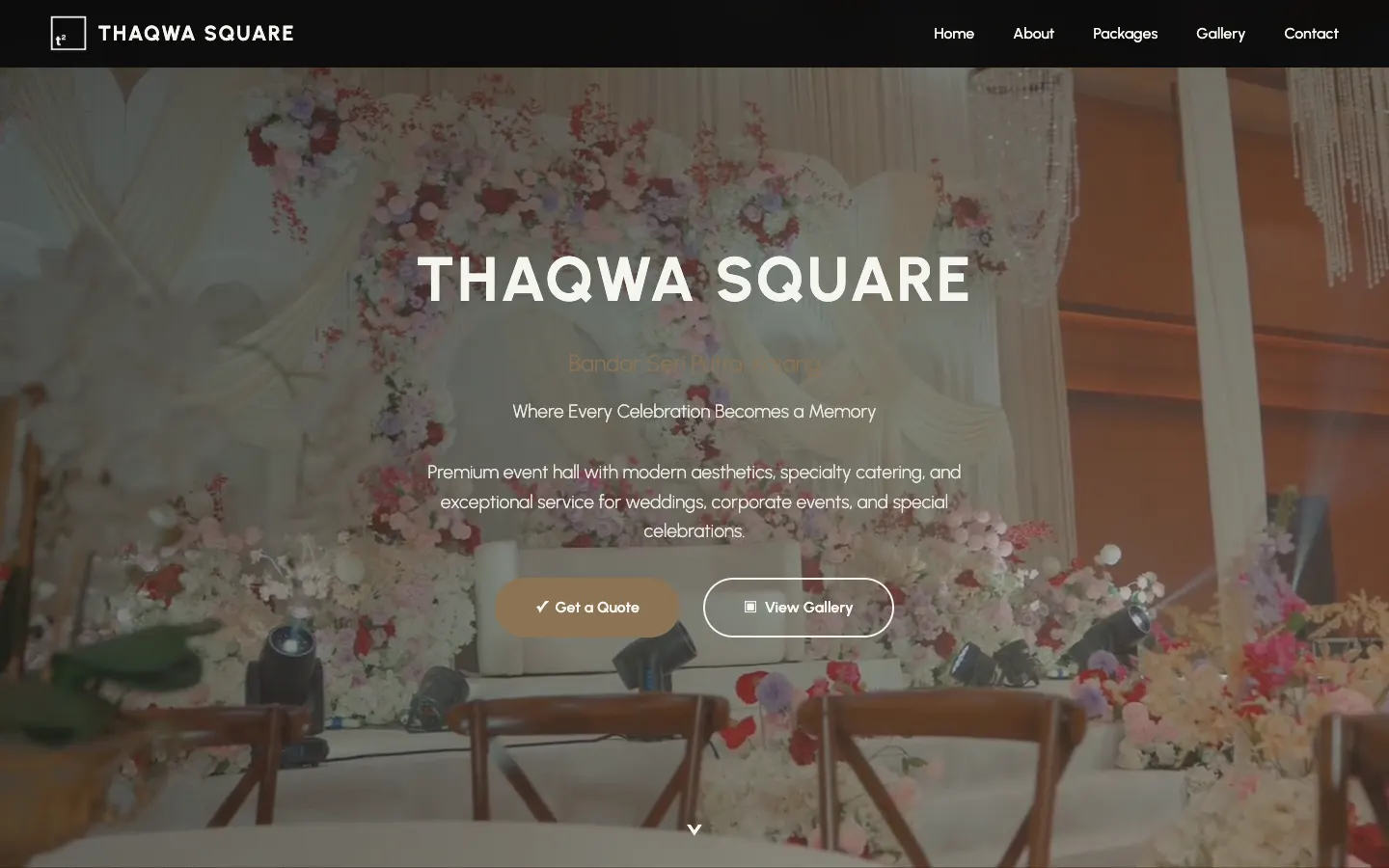 Project story · 5 min readThaqwa Square: a wedding hall website that turns browsing into WhatsApp quotes